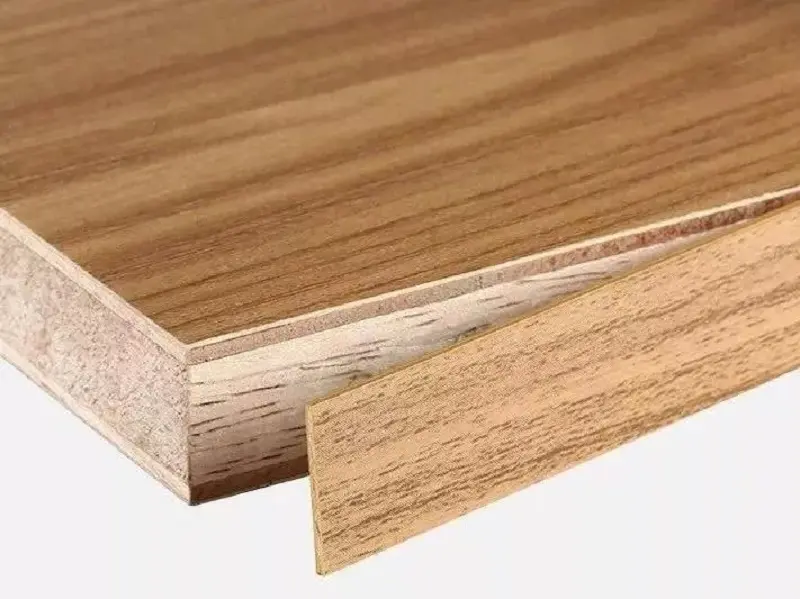
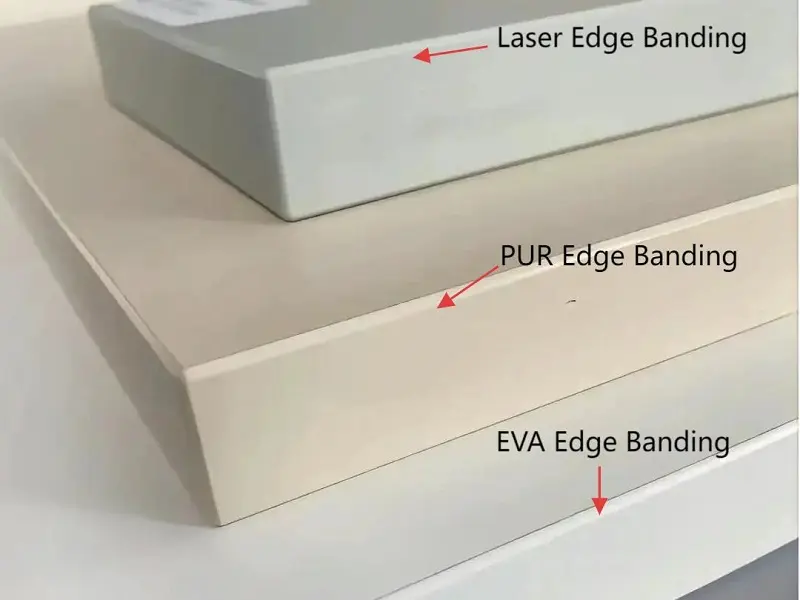
“Loose edges, thick glue lines, and chipping during trimming” are common pain points in nearly every furniture factory. This article systematically analyzes the key factors that affect edge banding performance from five aspects: equipment, hot melt adhesive, edge banding tape, substrate, and environment, helping you quickly identify the root causes of common issues.
Equipment
1. If the edge banding machine’s motor speed and conveyor speed are not synchronized, the conveyor belt may run unevenly in a wave-like manner. This creates stress between the edge tape and the panel end face, resulting in uneven edges and poor trimming.
2.Improper coordination between the glue roller and tape feeder often leads to glue shortage or uneven application.
3.Uneven pressure from the pressing units may cause the board to shift from the reference line, resulting in misalignment during trimming and polishing.
4.Worn trimming and chamfering tools, or the guide fence not being properly aligned with the panel, make it difficult to achieve clean and precise lines. This often requires additional manual trimming, which compromises overall quality.
5.Malfunctioning end trimming limit switch may cause panel collision, or result in inconsistent edge lengths (too long or too short).
Hot Melt Adhesive
1. Glue quantity: The glue amount should be controlled so that a small amount slightly squeezes out at the joint between the edge tape and the board. Excess glue will form visible glue lines that affect aesthetics, while too little glue will reduce bonding strength.
2. Glue temperature: If the temperature is too low (e.g., EVA glue <160°C), the glue will have poor flow and uneven distribution. If the temperature is too high (>200°C), the glue may carbonize, reducing bonding strength.
Edge Banding Tape
1. Edge banding materials include PVC, ABS, and acrylic, and each material has different requirements for glue type and bonding temperature.
2. When using thicker edge tape, the pressure roller position of the edge banding machine should be adjusted according to the tape thickness. Since the edge banding tape is slightly longer than the panel, pressure applied on the overhanging part exerts a force perpendicular to the feeding direction. If the glue hasn’t fully cured at this point, the bonding strength is low, and the tail end is prone to peeling.
Substrate
1. The vertical cutting error should be controlled within ±0.1 mm to avoid “crescent-shaped” gaps. When using a sliding table saw, the scoring blade should be 0.1 mm wider than the main blade (0.05 mm on each side), and both blades should be on the same level. This helps avoid chipping at the board edge.
2. Engineered wood panels often fail to meet the required thickness tolerance. This makes it difficult to adjust the distance between the pressure roller and the conveyor belt correctly. If the gap is too small, excessive pressure may cause delamination due to stress. If the gap is too large, the edge tape won’t be pressed tightly against the panel, resulting in poor bonding.
Environmental Factors
The operating environment of the edge banding machine should not be too cold, and the temperature should be above 12°C. The thicker the edge tape, the less flexible it becomes, so it is important to ensure that the preheating system functions properly. If there is no built-in preheater, a heat gun or hairdryer can be used to soften the tape before application.
Conclusion
Excellent edge banding is the result of many small but critical details. From machine performance and glue temperature to tape selection, board accuracy, and even room temperature — every element plays a role. By understanding and controlling these factors, manufacturers can reduce production issues, improve bonding strength, and create higher-quality furniture products. A reliable edge banding machine combined with the right materials and setup ensures long-term success in modern woodworking.