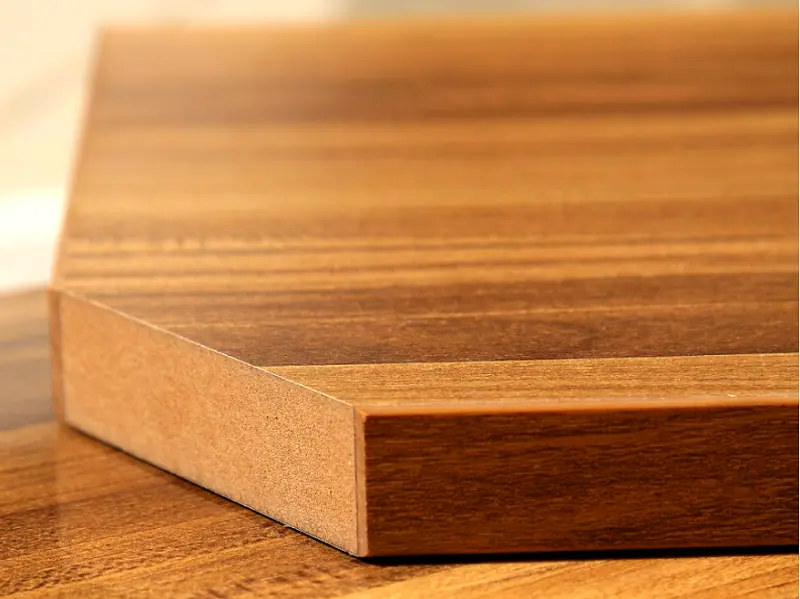
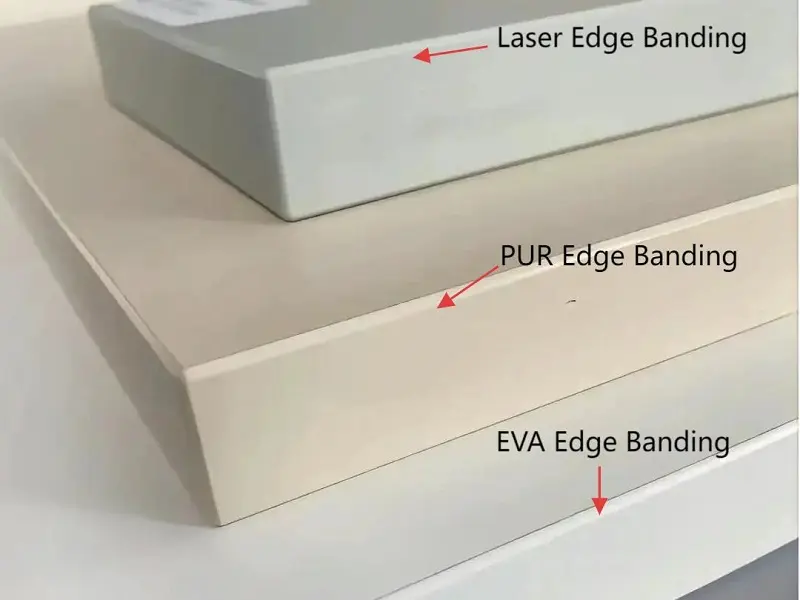
In furniture manufacturing, edge banding is a critical process that not only affects the appearance and aesthetics of the product but also impacts the durability and environmental performance of the panels. Choosing the right edge banding material is the first step to improving furniture quality.
This article introduces the most common types of edge banding materials along with their pros and cons, helping you make a more informed choice.
Common Types of Edge Banding Materials
1. PVC Edge Banding
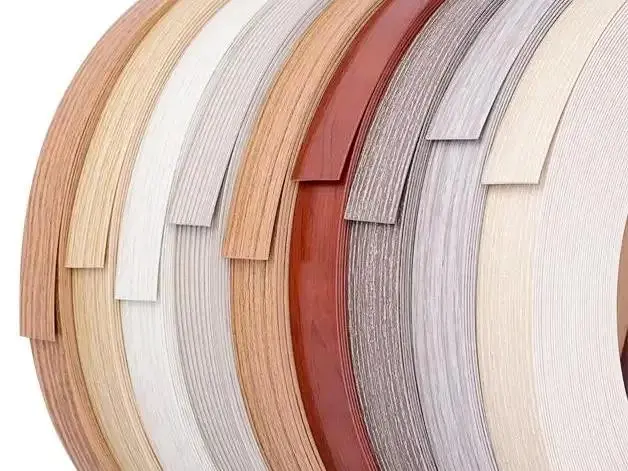
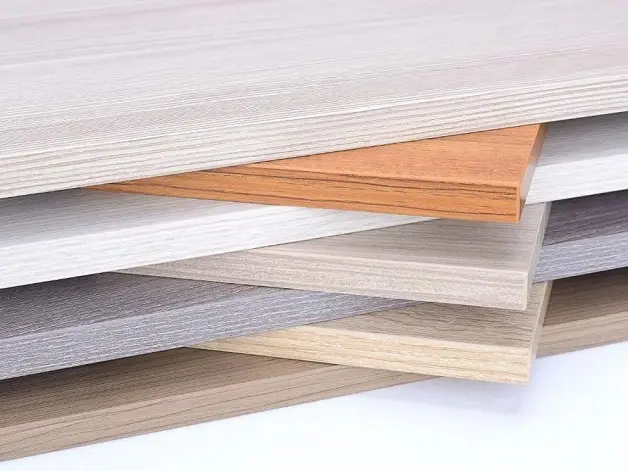
PVC edge banding is made primarily from polyvinyl chloride. It can feature wood grain, marble, fabric textures, and more, with bright and smooth patterns, realistic texture, and a three-dimensional appearance.
Advantages:
- Affordable price — the most common material on the market
- Wide range of colors, easy to match with various boards
- Wear-resistant and waterproof
- Good flexibility, suitable for curved edge banding
Disadvantages:
- Color difference may be noticeable after trimming
- Poor high-temperature resistance; prolonged exposure to heat can cause deformation
- Relatively shorter lifespan, prone to delamination and edge lifting
2. ABS Edge Banding
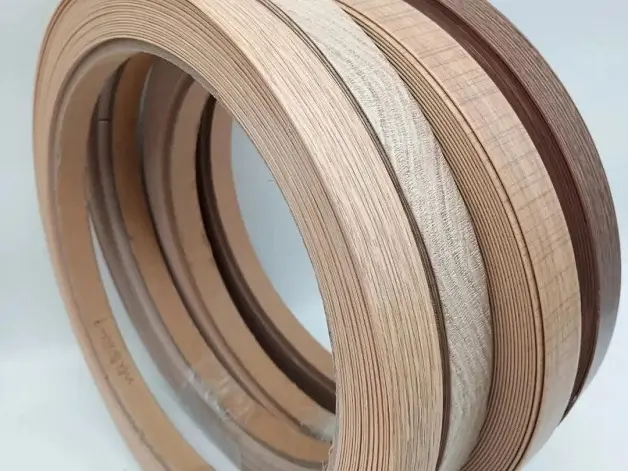
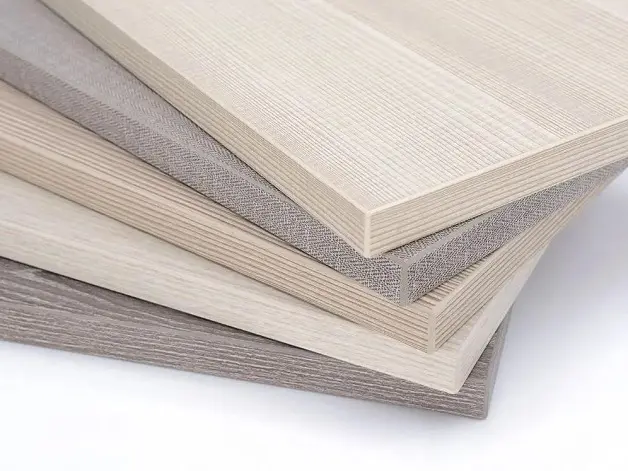
ABS is an eco-friendly engineering plastic that is safer compared to PVC, ideal for projects with higher environmental requirements.
Advantages:
- Eco-friendly and non-toxic, compliant with EU RoHS directives
- Good heat resistance and high impact strength
- High surface gloss, texture close to solid wood
- Low shrinkage rate, excellent stability after edge banding
Disadvantages:
- 30–50% more expensive than PVC
- Requires precise temperature control on edge banding machines
3. Real Wood Veneer Edge Banding
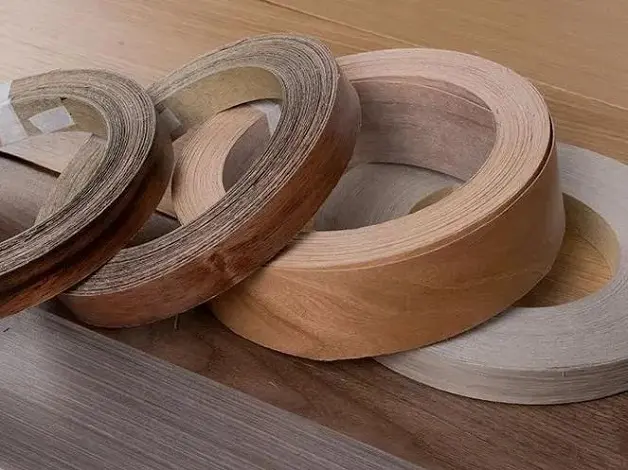
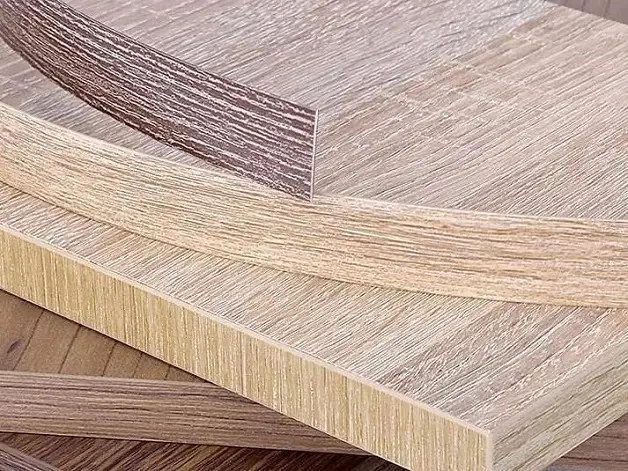
Made from natural wood veneer, often backed with non-woven fabric to improve strength and prevent cracking. Since it is made from genuine wood, it has a natural texture and authentic appearance, with a variety of species, patterns, and colors.
Advantages:
- Natural texture and premium appearance
- Perfect color and texture matching with furniture
- Can be stained or painted
Disadvantages:
- Sensitive to humidity and temperature, may warp or crack
- Higher cost and more demanding installation requirements
4. Aluminum Alloy Edge Banding
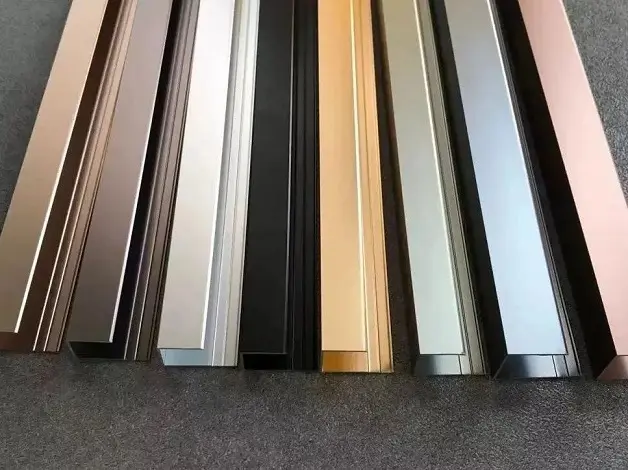
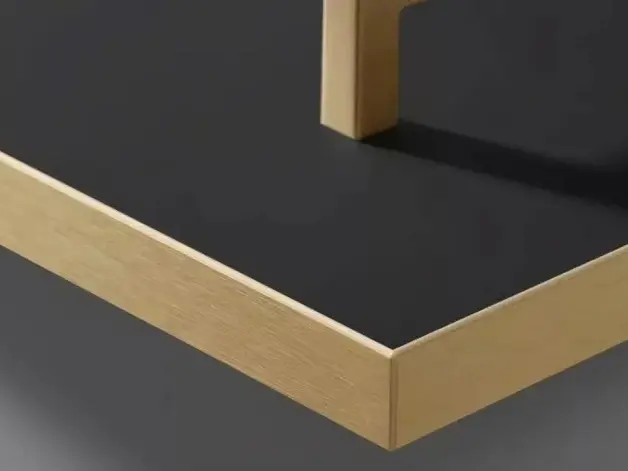
Advantages:
- Extremely strong with excellent impact resistance
- Modern appearance, suitable for minimalist styles
- Scratch- and corrosion-resistant, lifespan of over 20 years
Disadvantages:
- Does not match well with wood-grain surfaces
- Complex installation, requires specialized tools
5. Acrylic (PMMA) Edge Banding
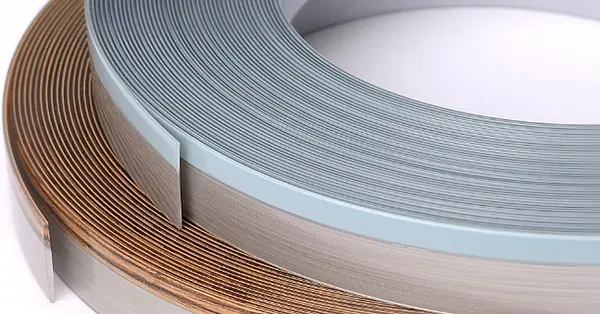
Made from acrylic (organic glass), featuring high transparency and the ability to create 3D “crystal edge” effects.
Advantages:
- High transparency and gloss, strong modern appeal
- Excellent weather resistance, does not yellow easily
- High hardness with outstanding scratch resistance
- Eco-friendly and non-toxic, compliant with food-contact standards
Disadvantages:
- 3–5 times more expensive than PVC
- Difficult to process, requires specialized equipment
- Brittle, not suitable for thin edge banding
How to Choose the Right Edge Banding Material?
When selecting edge banding materials, consider the following factors:
- Application environment: For high-humidity areas like kitchens and bathrooms, choose materials with good water resistance.
- Environmental standards: ABS is more suitable for markets with strict eco-friendly requirements.
- Budget: PVC offers the best value for mass production.
- Aesthetics: Acrylic and wood veneer can enhance the premium look of furniture.
- Equipment compatibility: Some high-end materials (e.g., ABS) require laser edge banding or hot-air edge banding technology.
Conclusion
The choice of edge banding material directly affects the quality and market competitiveness of furniture products. Each material has its strengths and weaknesses, and there is no single “best” option — the key is to match it to your product positioning and customer needs. We hope this article has provided you with useful insights for selecting the right edge banding material.